
Introduction
In today’s digital-first world, businesses need more than just a great product or service to succeed. Consumers spend a significant amount of their time online, researching products, comparing brands, reading reviews, and engaging with businesses through websites and social media platforms. This shift in consumer behavior has made digital marketing one of the most powerful tools for business growth.
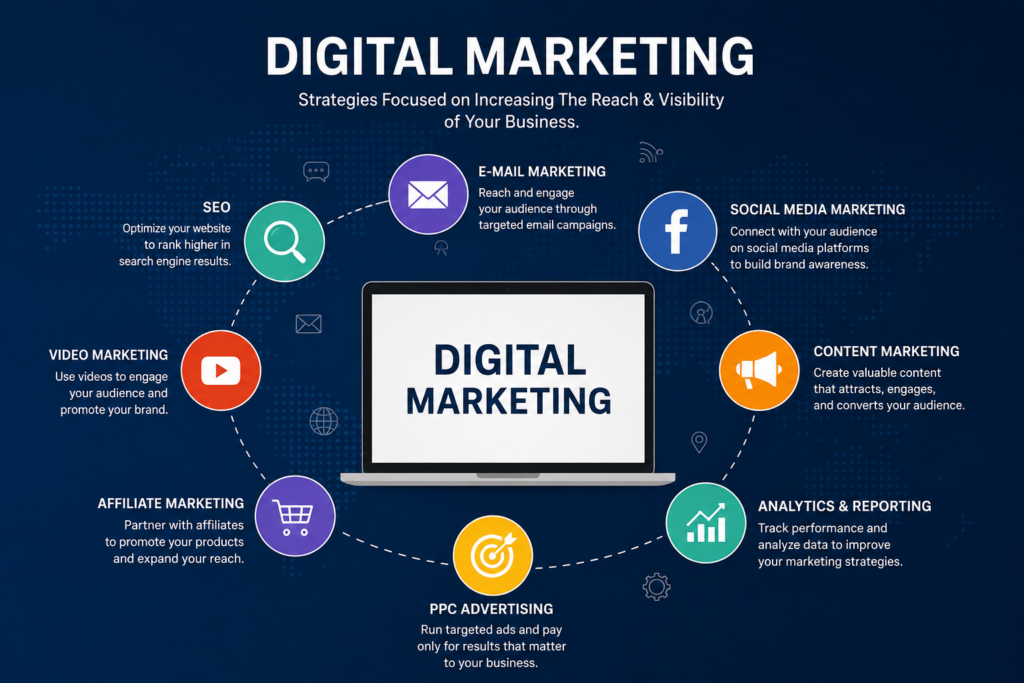
Digital marketing is the process of promoting products, services, and brands through online channels such as search engines, social media, email, websites, and mobile applications. It helps businesses connect with their target audience, build brand awareness, generate leads, and increase sales. Whether you are a small local business or a large enterprise, digital marketing provides opportunities to reach potential customers more effectively and efficiently than traditional marketing methods.
What is Digital Marketing?
Digital marketing refers to all marketing activities conducted through digital platforms and internet-connected devices. Unlike traditional marketing, which relies on newspapers, television, radio, and billboards, digital marketing allows businesses to communicate directly with customers in real time.
The primary goal of digital marketing is to attract, engage, and convert potential customers into loyal clients. Through various online strategies, businesses can create meaningful interactions with their audience and build long-term relationships.
Digital marketing offers several advantages, including:
Global audience reach
Cost-effective marketing campaigns
Measurable results and analytics
Better customer engagement
Increased brand visibility
Higher conversion rates
Personalized customer experiences
As technology continues to evolve, digital marketing has become an essential part of every successful business strategy.
Why Digital Marketing is Important for Businesses
Modern consumers rely heavily on the internet when making purchasing decisions. Before buying a product or service, people often search online for information, reviews, recommendations, and comparisons.
Businesses that fail to establish a strong online presence risk losing potential customers to competitors who are more visible online.
Some key reasons why digital marketing is important include:
Increased Brand Awareness
Digital marketing helps businesses become more visible online. Through social media platforms, search engines, and content marketing, brands can reach a wider audience and establish recognition in their industry.
Targeted Marketing
One of the biggest advantages of digital marketing is the ability to target specific audiences based on demographics, interests, location, behavior, and purchasing habits. This ensures marketing efforts reach people who are most likely to become customers.
Better Customer Engagement
Businesses can interact directly with customers through social media comments, messages, emails, and live chats. This creates stronger relationships and improves customer satisfaction.
Cost-Effective Advertising
Compared to traditional advertising methods, digital marketing often provides a higher return on investment. Businesses can start with a small budget and scale campaigns as they grow.
Data-Driven Decisions
Digital marketing tools provide detailed insights into campaign performance, allowing businesses to make informed decisions and optimize strategies for better results.
Key Components of Digital Marketing
- Search Engine Optimization (SEO)
SEO is the process of optimizing a website to improve its ranking on search engines such as Google. The higher a website appears in search results, the more organic traffic it receives.
SEO involves:
Keyword research
On-page optimization
Technical SEO
Content creation
Link building
Mobile optimization
Benefits of SEO:
Increased website traffic
Better user experience
Higher credibility and trust
Long-term business growth
Improved online visibility
SEO remains one of the most effective digital marketing strategies because it attracts users who are actively searching for products or services.
- Social Media Marketing (SMM)
Social media marketing involves promoting brands and engaging audiences through platforms such as Facebook, Instagram, LinkedIn, X, Pinterest, and YouTube.
Businesses use social media to:
Build brand awareness
Connect with customers
Promote products and services
Drive website traffic
Generate leads
Increase sales
Effective social media marketing requires:
Consistent posting
High-quality content
Audience engagement
Trend analysis
Performance tracking
Social media platforms have become powerful marketing channels because they allow brands to interact directly with consumers.
- Content Marketing
Content marketing focuses on creating valuable and relevant content to attract and retain customers.
Examples include:
Blog posts
Articles
Videos
Infographics
Podcasts
E-books
Case studies
Quality content helps businesses:
Build authority
Improve SEO rankings
Educate customers
Increase engagement
Generate leads
Businesses that consistently publish valuable content often establish themselves as industry leaders and gain customer trust.
- Pay-Per-Click Advertising (PPC)
PPC is a digital advertising model where businesses pay only when users click on their ads.
Popular PPC platforms include:
Google Ads
Meta Ads
LinkedIn Ads
YouTube Ads
Benefits of PPC advertising:
Instant visibility
Targeted audience reach
Measurable results
Flexible budgeting
High conversion potential
PPC campaigns are ideal for businesses seeking immediate traffic and lead generation.
- Email Marketing
Email marketing remains one of the most effective digital marketing channels for nurturing customer relationships.
Businesses use email marketing for:
Promotional campaigns
Product launches
Newsletter distribution
Customer retention
Personalized recommendations
Benefits include:
Direct communication
High ROI
Customer loyalty
Increased conversions
Personalized experiences
Successful email marketing focuses on delivering relevant and valuable content to subscribers.
- Influencer Marketing
Influencer marketing involves collaborating with content creators who have established credibility and audiences within specific niches.
Benefits include:
Enhanced brand credibility
Expanded audience reach
Increased engagement
Improved trust
Higher conversion rates
As social media continues to grow, influencer marketing has become a powerful strategy for brands seeking authentic promotion.
How Digital Marketing Generates Leads
Lead generation is one of the primary objectives of digital marketing. Businesses use various techniques to attract potential customers and guide them through the buying journey.
Effective lead generation strategies include:
SEO-optimized websites
Social media campaigns
Landing pages
Email marketing
Content marketing
Paid advertising
Webinars and online events
The goal is to capture customer information and nurture prospects until they are ready to make a purchase.
The Role of Analytics in Digital Marketing
Analytics play a critical role in measuring success and improving marketing performance.
Key metrics include:
Website traffic
Conversion rates
Bounce rates
Click-through rates
Engagement rates
Cost per lead
Return on investment (ROI)
By analyzing these metrics, businesses can identify strengths, uncover opportunities, and refine their strategies for better outcomes.
Emerging Digital Marketing Trends in 2026
The digital marketing landscape continues to evolve rapidly. Some of the latest trends include:
Artificial Intelligence (AI)
AI-powered tools help marketers automate tasks, personalize customer experiences, and analyze large amounts of data.
Voice Search Optimization
As voice assistants become more popular, businesses must optimize content for voice-based searches.
Video Marketing
Short-form and long-form video content continue to dominate online engagement and consumer attention.
Personalization
Consumers expect tailored experiences, making personalized marketing campaigns increasingly important.
Interactive Content
Quizzes, polls, calculators, and interactive experiences boost engagement and improve customer participation.
Marketing Automation
Automation tools streamline repetitive tasks, improve efficiency, and enhance customer journeys.
Common Digital Marketing Challenges
While digital marketing offers numerous benefits, businesses may face challenges such as:
High competition
Constant algorithm changes
Content saturation
Budget limitations
Data privacy concerns
Audience retention
Overcoming these challenges requires continuous learning, strategic planning, and adaptation to changing market conditions.
Tips for Creating a Successful Digital Marketing Strategy
Define clear business goals.
Understand your target audience.
Build a professional website.
Invest in SEO and content marketing.
Maintain an active social media presence.
Utilize email marketing effectively.
Monitor campaign performance regularly.
Optimize based on data insights.
Stay updated with industry trends.
Focus on delivering value to customers.
A well-planned strategy ensures consistent growth and long-term success.
Conclusion
Digital marketing has transformed the way businesses connect with customers. It offers unmatched opportunities to build brand awareness, generate leads, increase sales, and foster customer loyalty. Through strategies such as SEO, social media marketing, content marketing, email campaigns, and paid advertising, businesses can reach their target audience more effectively than ever before.
As technology continues to evolve, companies that embrace digital marketing and adapt to changing consumer behaviors will be better positioned for success. Whether you are launching a new business or expanding an existing brand, investing in digital marketing is one of the smartest decisions you can make for sustainable growth in 2026 and beyond.
Digital marketing is not just a trend—it is the foundation of modern business success.