
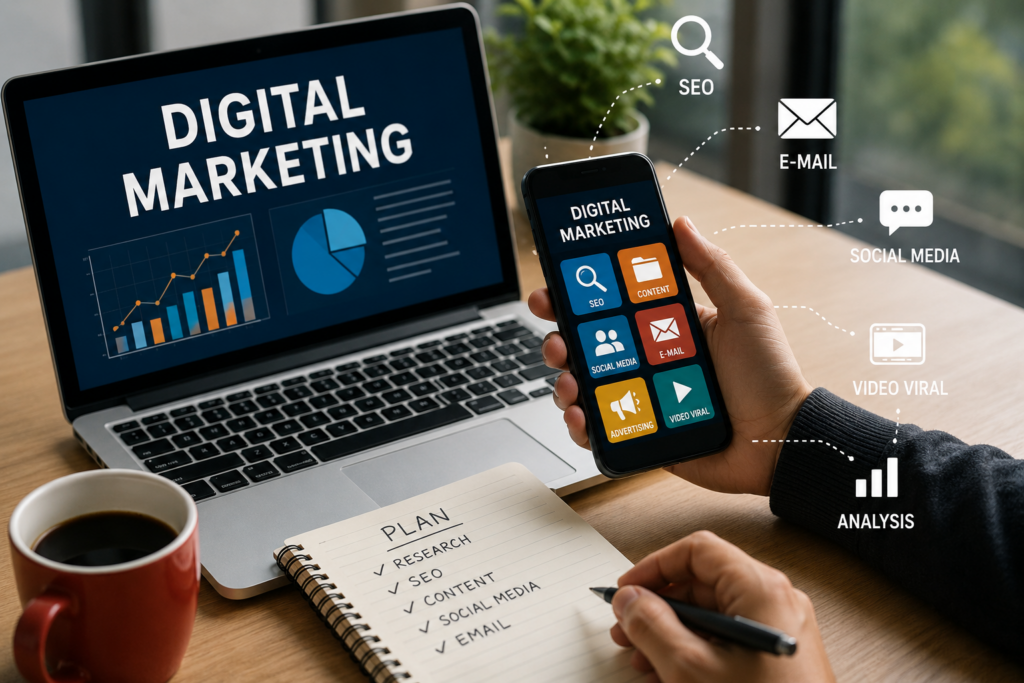
In the modern business world, digital marketing has become one of the most powerful ways to reach customers and grow a brand. With billions of people using the internet every day, businesses have an incredible opportunity to connect with their target audience through websites, search engines, social media platforms, email campaigns, and online advertisements.
Whether you are a startup, a small business owner, or a large enterprise, digital marketing helps you build brand awareness, generate leads, increase sales, and create lasting relationships with customers. Unlike traditional marketing, digital marketing provides measurable results, allowing businesses to track performance and improve their strategies for better outcomes.
What is Digital Marketing?
Digital marketing is the promotion of products, services, or brands using digital channels and online technologies. It involves various strategies and techniques that help businesses reach potential customers where they spend most of their time—on the internet.
Digital marketing includes:
Search Engine Optimization (SEO)
Social Media Marketing (SMM)
Content Marketing
Email Marketing
Pay-Per-Click Advertising (PPC)
Affiliate Marketing
Influencer Marketing
Website Marketing
Video Marketing
By combining these methods, businesses can create a strong online presence and stay ahead of the competition.
Why is Digital Marketing Important?
Consumer behavior has changed significantly over the years. Before making a purchase, most people search online for reviews, product information, and recommendations. If your business does not have a strong digital presence, you may lose potential customers to competitors.
Key Benefits of Digital Marketing
- Global Reach
Digital marketing allows businesses to connect with customers from different cities, countries, and even around the world. A small local business can attract international clients with the right online strategy.
- Cost-Effective Marketing
Compared to traditional advertising methods like television, newspapers, and billboards, digital marketing is much more affordable and offers a higher return on investment.
- Targeted Audience
Businesses can target specific audiences based on age, gender, location, interests, and online behavior. This ensures that marketing efforts reach people who are most likely to become customers.
- Measurable Results
One of the biggest advantages of digital marketing is analytics. Businesses can monitor website traffic, ad performance, customer engagement, and sales conversions in real time.
- Improved Customer Engagement
Social media platforms and email marketing enable businesses to communicate directly with customers, answer their questions, and build trust.
Major Components of Digital Marketing
Search Engine Optimization (SEO)
SEO is the process of improving a website’s visibility on search engines like Google. The higher your website ranks, the more visitors you can attract without paying for advertisements.
Benefits of SEO:
Increases organic website traffic.
Improves brand credibility.
Generates quality leads.
Delivers long-term results.
Enhances user experience.
SEO involves keyword research, content optimization, technical SEO, backlink building, and local SEO strategies.
Social Media Marketing (SMM)
Social media has become a vital part of everyday life. Platforms like Facebook, Instagram, LinkedIn, X (Twitter), and Pinterest help businesses interact with customers and promote their products.
Social Media Marketing Helps:
Build brand awareness.
Increase website traffic.
Generate leads and sales.
Improve customer relationships.
Create a loyal online community.
Consistent posting, engaging visuals, and interactive content are essential for successful social media marketing.
Content Marketing
Content marketing focuses on creating valuable and informative content that attracts and retains customers.
Common forms of content include:
Blog posts
Articles
Videos
Infographics
Podcasts
E-books
Case studies
High-quality content helps businesses establish authority in their industry and improve search engine rankings.
Pay-Per-Click Advertising (PPC)
PPC advertising allows businesses to display paid ads on search engines and social media platforms. Advertisers pay only when someone clicks on their ad.
Advantages of PPC:
Instant visibility.
Quick lead generation.
Flexible budget options.
Precise audience targeting.
Easy performance tracking.
Google Ads and Meta Ads are among the most popular PPC platforms.
Email Marketing
Email marketing remains one of the most effective digital marketing strategies. It helps businesses stay connected with existing customers and nurture potential leads.
Email Marketing Can Be Used For:
Promotional offers.
Product launches.
Company updates.
Newsletters.
Customer retention campaigns.
Personalized email campaigns often generate higher engagement and conversion rates.
Website Marketing
A professional website serves as the foundation of digital marketing. It is often the first place where customers learn about a business.
A successful website should be:
Mobile-friendly.
Fast-loading.
Easy to navigate.
SEO optimized.
Secure and reliable.
Designed for conversions.
A well-designed website creates a positive first impression and encourages visitors to take action.
Digital Marketing Trends in 2026
The digital world continues to evolve rapidly. Businesses that adapt to new trends can gain a competitive advantage.
Artificial Intelligence (AI)
AI-powered tools help automate marketing tasks, analyze customer data, and create personalized experiences.
Video Marketing
Short-form videos and live streaming continue to dominate online engagement.
Voice Search Optimization
With the growing use of voice assistants, businesses are optimizing content for voice searches.
Influencer Marketing
Collaborating with influencers helps brands reach larger and more engaged audiences.
Personalized Marketing
Customers expect customized experiences based on their interests and preferences.
How to Create a Successful Digital Marketing Strategy
A strong digital marketing strategy includes the following steps:
Step 1: Define Your Goals
Set clear objectives such as increasing website traffic, generating leads, or boosting sales.
Step 2: Understand Your Audience
Research your target customers, their interests, and their online behavior.
Step 3: Build a Professional Website
Create a website that reflects your brand and provides a great user experience.
Step 4: Focus on SEO
Optimize your website to rank higher in search engine results.
Step 5: Create Valuable Content
Publish blogs, videos, and social media posts that solve customer problems.
Step 6: Use Social Media
Stay active on platforms where your audience spends time.
Step 7: Invest in Paid Advertising
Use PPC campaigns to drive immediate traffic and leads.
Step 8: Analyze and Improve
Track campaign performance and continuously optimize your marketing efforts.
Common Digital Marketing Mistakes to Avoid
Many businesses struggle because they make avoidable mistakes.
Ignoring SEO.
Posting inconsistent content.
Not understanding the target audience.
Failing to track campaign performance.
Neglecting mobile users.
Using poor-quality visuals and content.
Giving up before seeing long-term results.
Avoiding these mistakes can significantly improve marketing success.
The Future of Digital Marketing
Digital marketing will continue to grow as technology advances and consumer behavior evolves. Businesses that embrace innovation, create valuable content, and focus on customer experience will be better positioned for long-term success.
Companies that invest in SEO, social media marketing, AI tools, and personalized customer engagement strategies are likely to see stronger growth and higher returns.
Conclusion
Digital marketing is more than just promoting products online—it is about building relationships, creating value, and helping businesses grow in an increasingly connected world. From SEO and social media marketing to content creation and paid advertising, every digital strategy plays an important role in attracting customers and increasing revenue.
A successful digital marketing plan requires creativity, consistency, and data-driven decision-making. By staying updated with the latest trends and focusing on customer needs, businesses can build a powerful online presence and achieve sustainable growth.
In the digital age, businesses that adapt, innovate, and connect with their audience online are the ones that thrive. Digital marketing is not just the future of business—it is the present, and the opportunity to grow has never been greater.